What is Agentic Commerce Protocol (ACP) and How Does It Work?
Until recently, AI could read a webpage and suggest what to do next, but it couldn’t actually buy anything for you. Traditional e-commerce is built for humans—relying on us to click through pop-ups, manually enter credit cards, and click "Place Order".
That friction is dissolving. With the rise of the Agentic Commerce Protocol (ACP), we are entering an era where AI doesn't just recommend products; it executes transactions autonomously on your behalf.
Here is everything you need to know about what ACP is, how it works, and why it is the next massive shift in retail technology.
What is the Agentic Commerce Protocol (ACP)?
The Agentic Commerce Protocol (ACP) is an open-source standard and interaction model designed to connect buyers, their AI agents, and businesses to complete transactions seamlessly.
Jointly governed by OpenAI and Stripe (and licensed under Apache 2.0), ACP defines a standardized "common language" that allows AI agents (like ChatGPT) to talk directly to merchant checkouts.
Instead of forcing a user to leave a chat interface, navigate to a storefront, create an account, and check out, ACP lets the AI agent handle the entire purchase process natively and securely.
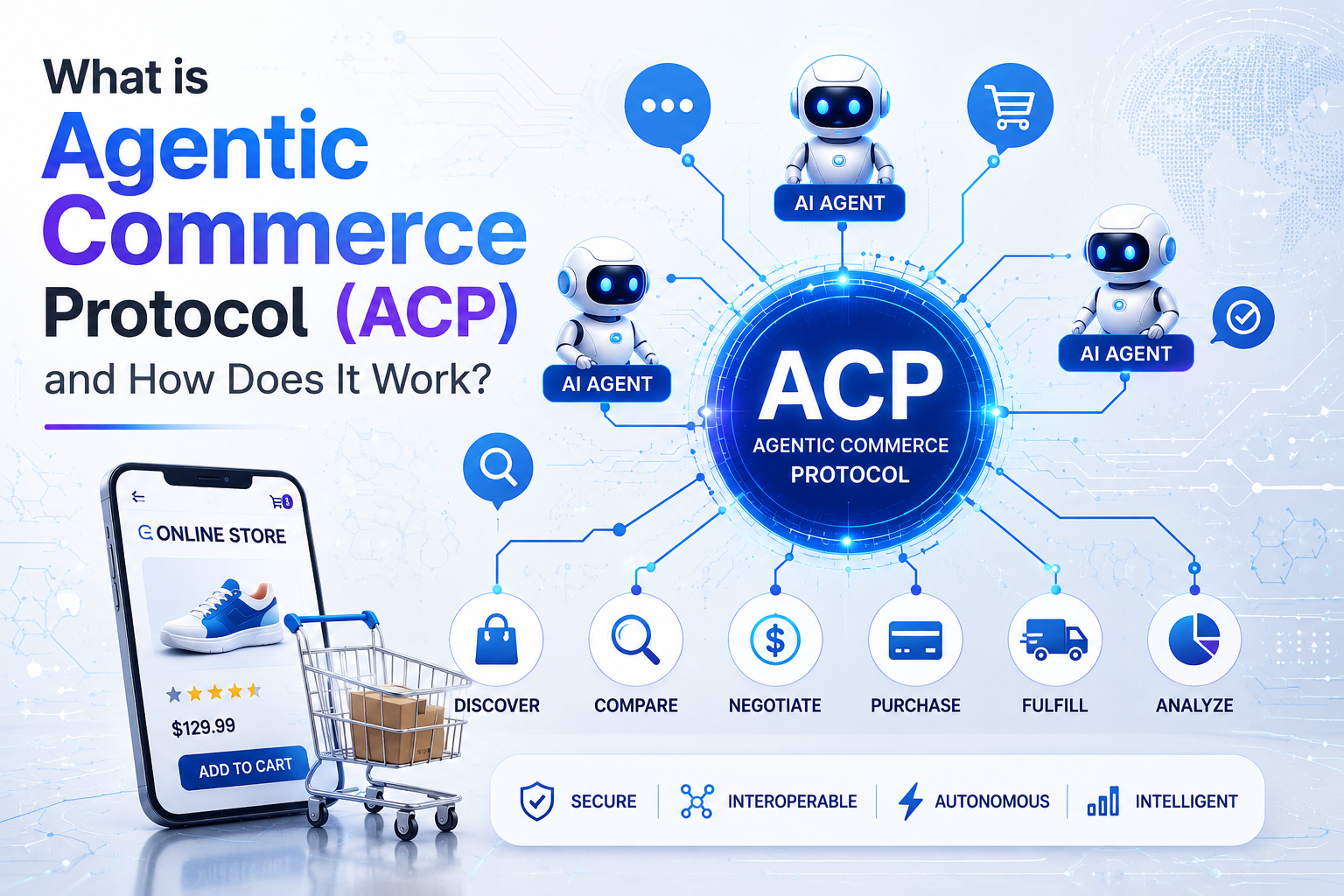
Key Takeaway: Think of ACP to AI shopping what HTTPS was to secure web browsing—it is the open standard that makes autonomous, machine-to-merchant commerce safe, reliable, and auditable.
How ACP Works: The Step-by-Step Transaction Flow
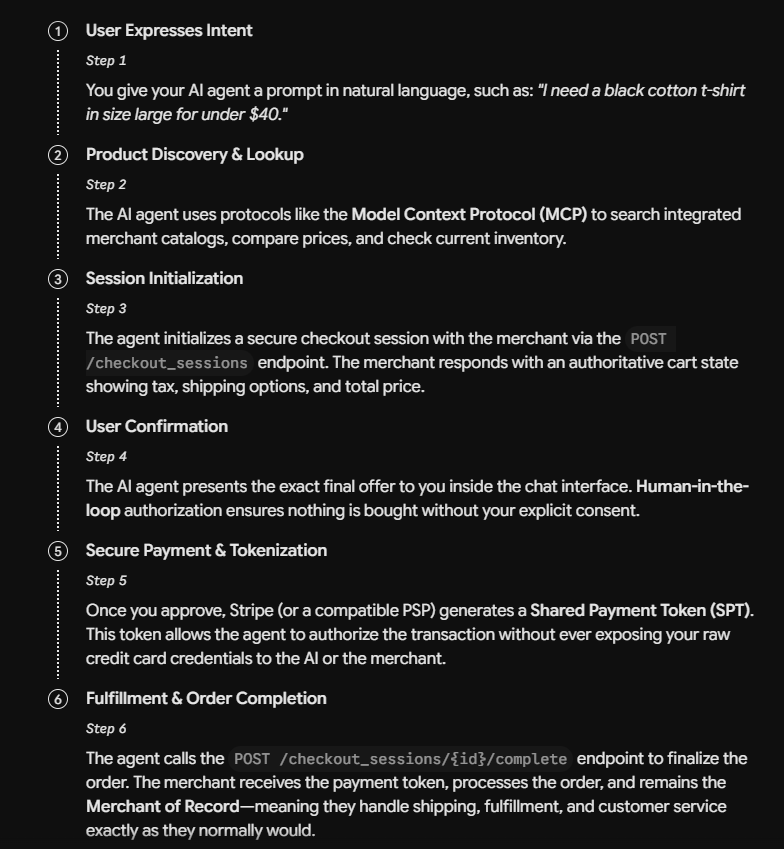
ACP governs how an AI agent interacts with a merchant’s API behind the scenes. It focuses on the transaction and checkout lifecycle through five core API operations: creating, updating, retrieving, completing, and canceling checkout sessions.
Here is how a standard transaction flows from natural language to delivery:
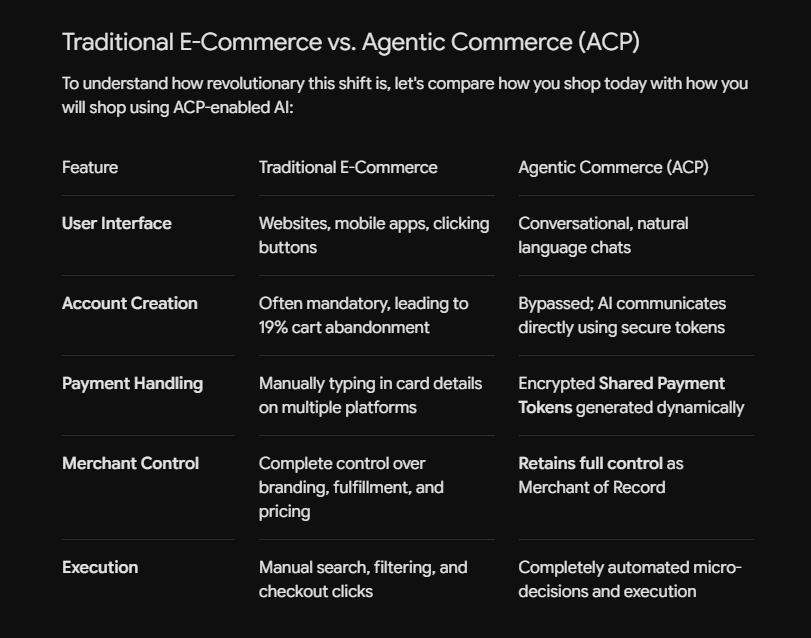
What Makes ACP Different? (ACP vs. Google's UCP)
As agentic commerce accelerates, different tech giants are proposing their own systems. A common comparison is between OpenAI/Stripe's ACP and Google's Universal Commerce Protocol (UCP).
Agentic Commerce Protocol (ACP): Launched in late 2025, ACP is highly optimized for direct transaction execution. Developed with Stripe, it relies heavily on secure token handoffs to let agents complete payments (such as ChatGPT's Instant Checkout feature).
Universal Commerce Protocol (UCP): Launched by Google in early 2026, UCP takes a broader approach. Instead of focusing just on the payment step, UCP aims to standardize the entire end-to-end shopping journey—including discovery, comparison, purchase, and post-purchase customer support.
Why Businesses and Developers Should Care
The protocol is rapidly moving from a novel concept to a standard operational rail.
Tap into High-Intent Buyers: Instead of fighting for attention in crowded search engine result pages, your products can be recommended and instantly purchased directly inside AI tools like ChatGPT or Microsoft Copilot.
Zero payment infrastructure overhaul: If you already use modern payment processors like Stripe, adapting to ACP is straightforward. You do not need to build complex security systems to handle AI agent payments.
Keep Your Customers: ACP is built specifically so that businesses maintain their direct customer relationships. You still handle the shipping, retain the customer data, and control the pricing—preventing AI platforms from cutting you out of the loop.
The era of "search, click, and buy" is shifting toward "ask, authorize, and receive." By implementing open standards like the Agentic Commerce Protocol, forward-thinking brands are setting themselves up to be the first storefronts accessible to the next generation of digital shoppers: AI agents.
Tags
#AI #AgenticCommerce #AgenticCommerceProtocol #ACP #AgenticAI #AIAgents #AICommerce #ArtificialIntelligence #Automation #AutonomousAI #EnterpriseAI #DigitalCommerce #DigitalTransformation #AIProtocols #IntelligentAgents #MachineLearning #GenerativeAI #APIs #SoftwareDevelopment #ECommerce #AIInnovation #TechInnovation #Technology #TechNews #AITrends #FutureOfCommerce #FutureTech #AI2026