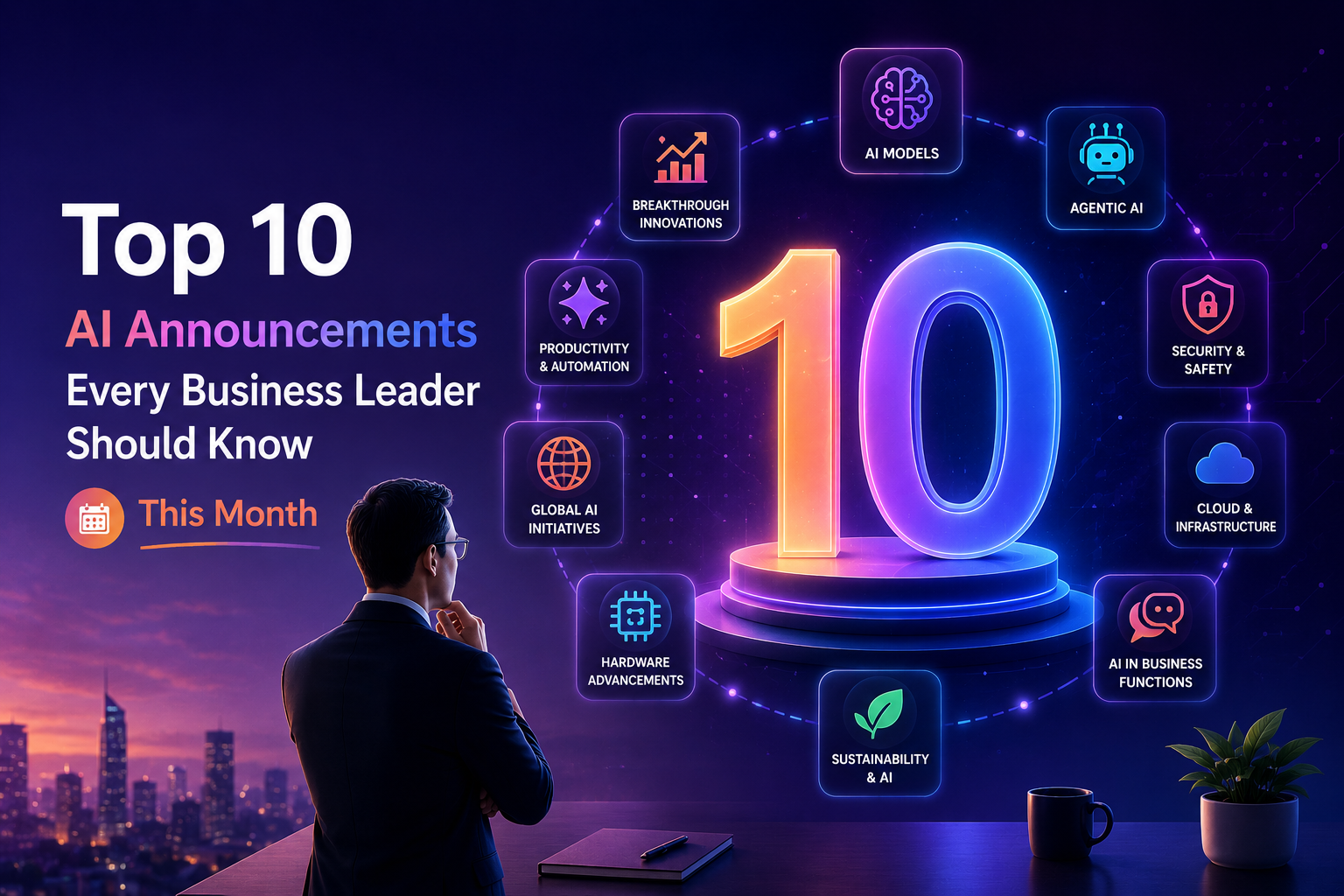
Top 10 AI Announcements Every Business Leader Should Know This Month
The mid-point of 2026 has brought a massive paradigm shift in the artificial intelligence landscape. The era of treating AI as a "cool chatbot plugin" is officially over. Today, tech giants and enterprise leaders are aggressively rolling out structural updates designed to transition AI into core operational infrastructure.
If you are leading an organization, managing a team, or steering a product roadmap, these are the top 10 AI breakthroughs and platform announcements you need to track right now.
1. Anthropic Nears Trillion-Dollar Valuation as "AI as Infrastructure" Takes Off
Anthropic closed a massive $65 billion funding round, sending its valuation toward approximately $965 billion. This isn’t just tech hype; Wall Street is no longer valuing AI companies as traditional software vendors. Instead, they are being treated like foundational utilities—akin to cloud platforms or electrical grids—upon which the future economy will be built.
2. Microsoft Build 2026 Launches "Rayfin" to Automate Backend Ops
Microsoft introduced Rayfin, an open-source development kit and command-line tool built natively into Microsoft Fabric. Rayfin allows AI agents to move directly from a written prompt to a live, production-ready enterprise database and application backend. Essentially, your AI developers can now deploy secure infrastructure without manually configuration.
3. NVIDIA Drops "NemoClaw" and "OpenShell" for Autonomous Engineers
Announced at GTC Taipei, NVIDIA launched NemoClaw—specialized blueprints designed to build autonomous AI engineers capable of executing massive, multi-tool workflows in semiconductor and industrial design. Alongside it comes OpenShell, a secure runtime container backed by Canonical (Ubuntu) and Red Hat to ensure these long-running agents operate within strict corporate boundaries.
4. Google Cloud Rolls Out "Gemini Enterprise Agent Platform"
During its latest enterprise updates, Google fully committed to the "agentic era" by releasing its dedicated Enterprise Agent Platform. Powered by brand-new, eighth-generation Tensor Processing Units (TPUs), the network is custom-built to support thousands of always-on digital workers interacting simultaneously across corporate systems.
5. OpenAI Embeds Its Frontier Models into AWS Cloud
In a major distribution win, OpenAI announced that its frontier models and specialized Codex code-generation engines are now officially available natively on Amazon Web Services (AWS). This provides enterprise companies already tethered to Amazon’s ecosystem a frictionless pipeline to deploy OpenAI infrastructure with cloud-native security.
6. Financial Titans Deploy Domain-Specific Systems on Wall Street
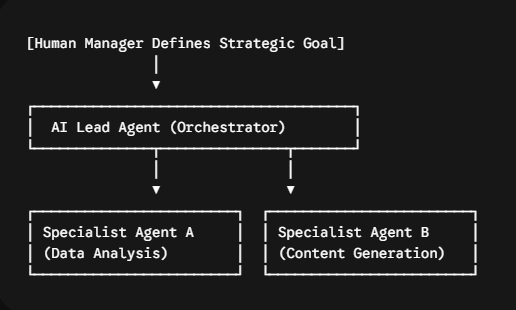
Wall Street has become the definitive proving ground for high-stakes AI. Major investment firms like Goldman Sachs and Blackstone have begun deploying highly specialized agent networks focused on financial workflows, auditing compliance, and executing portfolio risk management at speeds humans simply cannot match.
7. The Debut of "Gemma 4" Open-Weights Model
Google launched Gemma 4, claiming it is "byte for byte" the most capable open-weights model on the market. Optimized specifically for complex logic and multi-step reasoning, Gemma 4 allows startups and mid-market enterprises to run high-performance agentic workflows locally or in private clouds without paying heavy API fees to dominant providers.
8. Global Tech Sovereignty: European Union Launches "AI.grids"
The European Commission announced a massive, 48-partner sovereign AI framework called AI.grids. Coinciding with its new Tech Sovereignty Package, the project builds localized EU models designed to sustainably manage, predict, and run energy networks and data centers amid skyrocketing compute demands.
9. Big Tech Agrees to Mandatory Pre-Release Governance Testing
Under pressure from global regulators, leading AI laboratories (including Microsoft and xAI) have officially agreed to provide early access of their upcoming frontier architectures to governmental monitoring bodies. "Safety and visibility" are transitioning from abstract PR goals into product features built directly into B2B procurement pipelines.
10. Google Colab Introduces "Learn Mode" for Vibe Coding
Google rolled out Learn Mode inside Colab, changing how teams upskill. Instead of simply generating code snippets for developers, the preference-tailored AI tutor explicitly coaches the user on the how and why behind algorithmic logic. It is part of a broader push to lower technical barriers so non-technical leaders can build functional workflows through natural language.
Tags
#AI #AIAnnouncements #BusinessLeadership #ArtificialIntelligence #EnterpriseAI #AITrends #BusinessInnovation #DigitalTransformation #AIAutomation #TechNews #ExecutiveInsights #AIForBusiness #FutureOfWork #AIStrategy #BusinessTechnology #InnovationLeadership #MachineLearning #GenerativeAI #AIUpdates #TechnologyTrends #LeadershipInsights #BusinessGrowth #TechInnovation