The Silicon Workforce: Humanoid Robotics and the Rise of "Physical AI"
Few years ago, the image of a humanoid robot in a factory was the stuff of science fiction. But as of late 2025, the narrative has shifted from "if" to "how fast." Industrial titans like Amazon and BMW have moved past flashy demos and into rigorous, multi-month deployments of humanoid fleets.
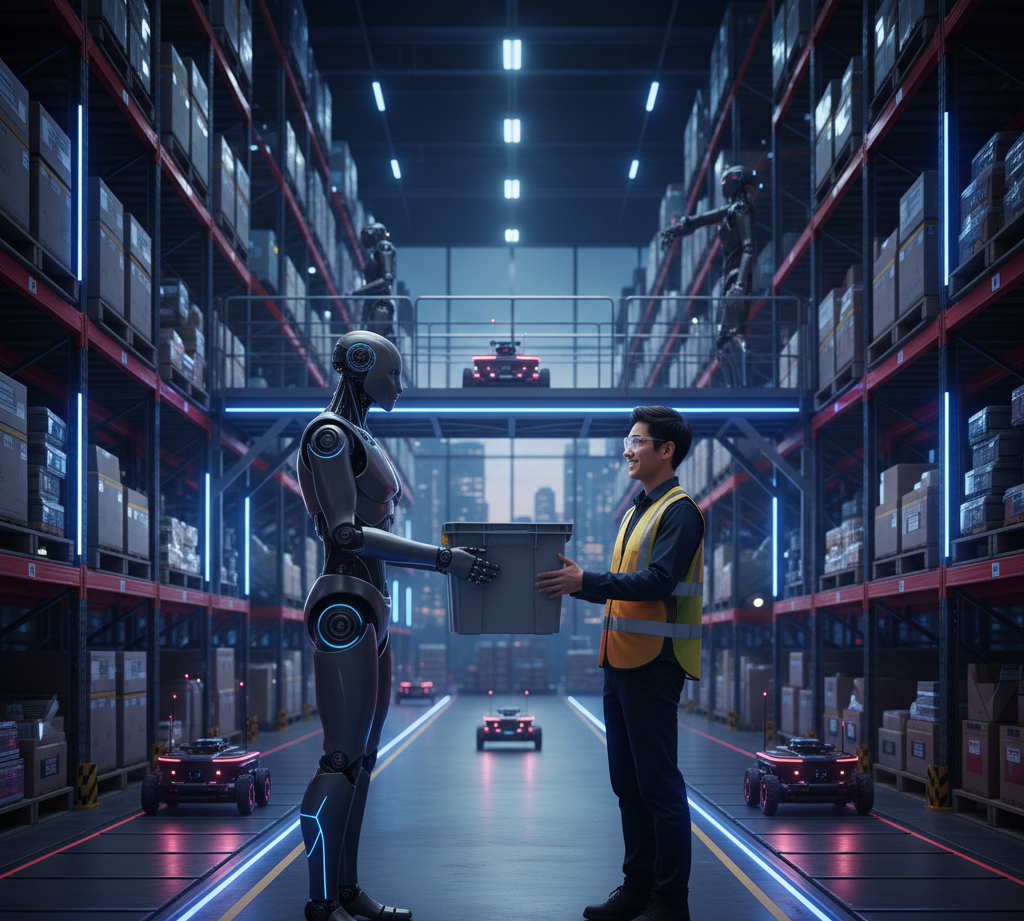
This isn't just about robots that look like us; it's about Physical AI—the intelligence required to coordinate these machines across complex, ever-changing warehouse floors.
The Landmark Pilots: From Trials to Production
The year 2025 has been a "bellwether" year for humanoid integration. Two primary players have set the standard for what the "Silicon Workforce" looks like:
BMW & Figure AI: At the Spartanburg plant, BMW recently concluded an 11-month pilot with the Figure 02 robot. Operating in 10-hour shifts, these robots successfully loaded over 90,000 sheet metal parts into welding fixtures. This wasn't just a test of mobility; it was a test of precision, with robots achieving placement accuracy within a 5-millimeter tolerance.
+2
Amazon & Agility Robotics: Amazon has been scaling its testing of Digit, a bipedal robot designed to handle the "tote recycling" process. By taking over the repetitive task of moving empty bins, Digit allows Amazon to optimize its human workforce for more complex decision-making roles, contributing to a reported 25% boost in fulfillment efficiency.
What is "Physical AI"?
The secret sauce isn't just the hardware; it's the software orchestration. Physical AI allows a robot to:
Navigate Human Spaces: Unlike traditional "caged" industrial robots, humanoids must navigate docks, narrow aisles, and stairs designed for people.
Fleet Coordination: AI models like Amazon's DeepFleet are now managing "robot armies," optimizing travel routes in real-time to prevent congestion.
Adaptive Learning: Using "end-to-end" neural networks, these robots learn tasks by observing humans, allowing them to adjust their grip or gait if a box is slightly out of place or the floor is slippery.
Why Humanoid? (The Infrastructure Argument)
The big question has always been: Why build a robot with two legs when wheels are easier? The answer lies in Legacy Infrastructure. To automate a traditional warehouse with wheeled robots, you often have to rebuild the entire floor. Humanoids can "step into" existing factories without a single renovation. They can climb the same stairs, reach the same shelves, and use the same tools as the humans they work alongside.
The Road Ahead: 2026 and Beyond
As we enter 2026, the focus is shifting from Hardware Reliability (making sure the robot doesn't fall) to Inference Economics (making sure the robot is cheap enough to run at scale). With manufacturing costs for humanoids projected to drop toward $20,000 per unit, we are on the verge of seeing these autonomous colleagues move from specialized pilots into every major distribution center in the world.
Key Takeaways for Logistics Leaders
Process First: Don't automate a broken workflow. BMW succeeded because they targeted a specific, high-repetition welding task.
Safety & Collaboration: The goal is "Cobotics"—robots working with humans, not replacing the entire facility.
Data is the Fuel: Successful fleet management requires a robust "digital twin" of the warehouse to coordinate movements.