The Hidden Bottleneck: Why AI Infrastructure Is the Real Race Now
In 2026, the conversation around Artificial Intelligence has undergone a seismic shift. We are no longer just asking, "What can the model do?" but rather, "Can the grid handle it?" and "How fast can we cool the chips?"
The era of "Model Supremacy" has been superseded by the era of Infrastructure Sovereignty. This blog post explores why the real AI race is no longer happening in the code of LLMs, but in the concrete and silicon of the physical world.
The Shift: From Algorithms to Atoms
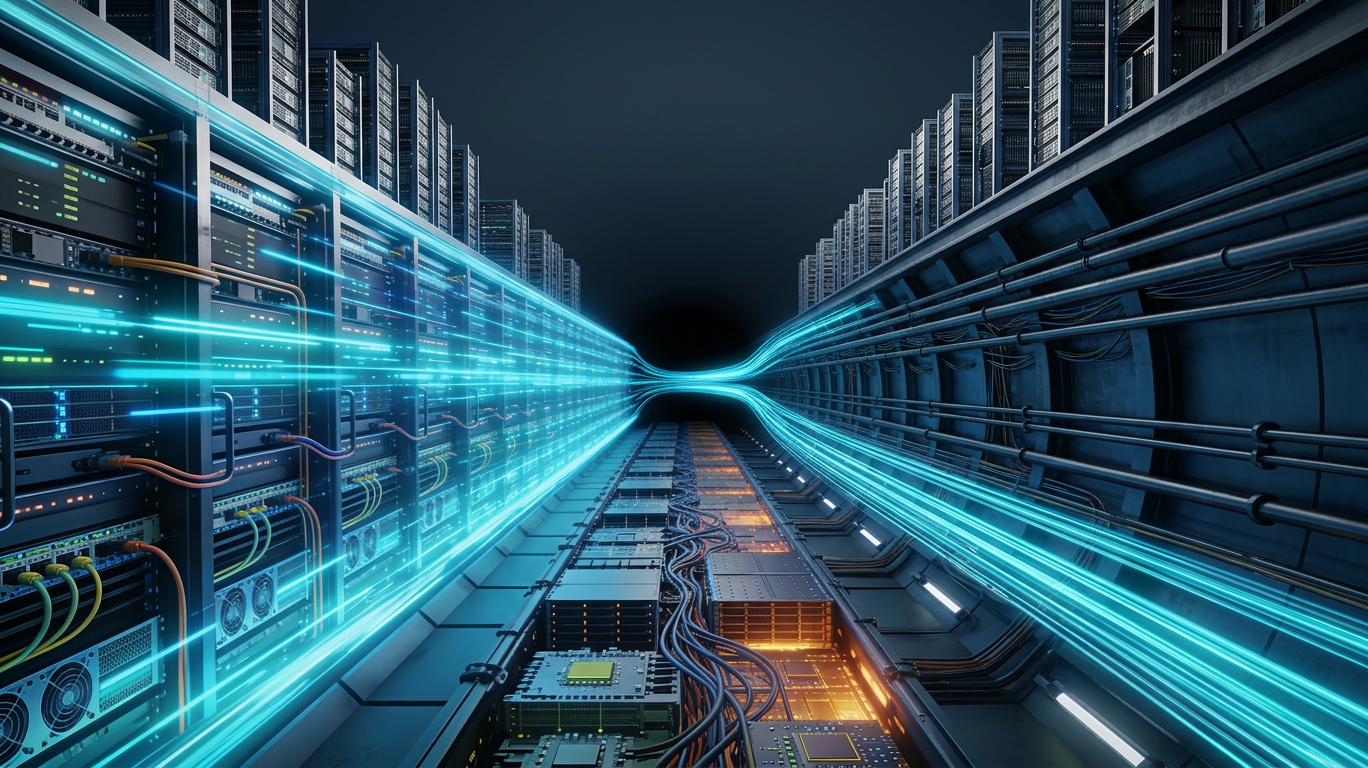
For years, the "AI Race" was defined by parameters and benchmarks. Companies like OpenAI, Anthropic, and Google DeepMind competed for the most "intelligent" model. But by early 2026, we’ve reached a point of diminishing returns in raw model training; the delta between GPT-5, Claude 4.5, and Gemini 3 is narrowing.
The new differentiator is Execution at Scale.
1. The Power Wall: Energy as a Strategic Asset
In 2026, energy is the new silicon. Estimates suggest that data center energy consumption could hit 1,050 TWh this year—roughly the entire power demand of Canada.
The "Bring Your Own Power" (BYOP) Trend: Hyperscalers are no longer waiting for the grid. They are investing directly in small modular reactors (SMRs) and massive solar-plus-storage farms.
The Efficiency Mandate: 93% of AI infrastructure leaders are now prioritizing their energy footprint over raw compute speed. If you can’t power the model, its intelligence is zero.
2. The Cooling Crisis
Traditional air cooling has reached its physical limit. Frontier models now require chips that consume 2–4 times more watts than conventional hardware. This has birthed a massive secondary race in liquid cooling and immersion technologies.
"AI is exposing power and cooling gaps that block progress long before we run out of data or ideas." — 2026 State of AI Infrastructure Report
3. Geopolitics and Silicon Sovereignty
The race is no longer just "Silicon Valley vs. the World." It’s about where the chips are physically located. Governments are now treating AI infrastructure as a sovereign utility, similar to water or electricity.
Regional AI: Nations in the Gulf and East Asia are building "Sovereign AI Clouds" to ensure their data and compute power aren't dependent on Western providers.
Custom Silicon: To escape the "NVIDIA tax," companies are shifting toward custom ASICs (Application-Specific Integrated Circuits) like Google’s TPUs and Tenstorrent’s new AI processors to optimize for specific agentic workloads.
The "Hidden" Bottlenecks of 2026
While everyone watches the chatbot UI, these three factors are actually determining who wins:
BottleneckImpactThe 2026 Solution
Grid Capacity
The Impact: New data centers are facing massive delays, often waiting 3+ years just to get a connection to the electrical grid.
The 2026 Solution: Companies are pivoting to "sovereign power" by building their own on-site microgrids and forming direct partnerships with nuclear energy providers.
High-Bandwidth Memory (HBM)
The Impact: This creates a "data traffic jam" that slows down the reasoning capabilities of "thinking" models during inference.
The 2026 Solution: Engineers are using 3D-stacked memory and "memory-on-logic" architectures to physically move the data closer to the processor.
Talent Gap
The Impact: A staggering 98% of firms currently lack the specialized engineering skills required to manage and optimize complex AI hardware stacks.
The 2026 Solution: Many businesses are abandoning the "Do It Yourself" approach in favor of specialized GPU clouds (like CoreWeave) that handle the infrastructure heavy lifting for them.
The New Hierarchy: AI-Core vs. AI-Enabled
The market has split into a clear architecture:
The 5% (AI-Core): The "Sovereignty Layer." These are the architects of the infrastructure—NVIDIA, Microsoft, and the energy giants.
The 25% (AI-Native): Firms that build on this infrastructure to replace human labor with autonomous agents.
The 70% (AI-Enabled): Companies struggling to modernize legacy data stacks to even use the infrastructure.
Final Thoughts The Concrete Reality
In 2026, the "Hidden Bottleneck" is a reminder that intelligence is not ethereal—it is physical. The companies and nations that will dominate the next decade aren't just the ones with the smartest researchers; they are the ones who secured the transformers (the electrical ones), the copper, and the cooling systems first.
The software race is a sprint, but the infrastructure race is a marathon through a construction site. The real winners are the ones building the track.