The Art of Motion: Hyundai and Boston Dynamics Unleash a New Era of Fluid Robotics
In the past "robot motion" often conjured images of clunky, staccato movements – impressive for their mechanical prowess, but far from the natural grace of a human. That perception has been shattered, particularly by the latest iterations of the Boston Dynamics Atlas robot, now under the innovative stewardship of Hyundai.
At CES 2026, amid the clamor for practical humanoid applications, Atlas didn't just walk or carry; it flowed. The demonstrations highlighted a level of agility, balance, and seamless transition between actions that marks a profound leap forward, solidifying the idea that robots can now move with truly organic fluidity.
More Than Just Walking: The Dance of Dexterity
The "fluidity" wasn't just about speed, but about the elegance and efficiency of motion. Key aspects that stood out included:
Dynamic Balance in Real-Time: Atlas showcased an uncanny ability to maintain balance even when subjected to unexpected pushes or traversing uneven terrain. This isn't just about static equilibrium; it's about anticipating and reacting to momentum shifts with split-second precision.
Seamless Task Transitions: Gone are the hesitations between picking up an object, walking, and then placing it down. Atlas demonstrated a continuous flow, integrating vision, grasping, and locomotion into one smooth, uninterrupted sequence. Imagine a human performing a complex task without breaking concentration – that's the level of integration we're now seeing.
Advanced Manipulation with Whole-Body Control: The fluidity extended to its upper body and hands. Atlas wasn't just moving its arms; it was using its entire body, torso, and legs to assist in reaching, lifting, and placing objects, much like a human would leverage core strength for heavy lifting. This whole-body coordination is critical for complex real-world tasks.
Agility in Confined Spaces: Demonstrations showed Atlas navigating tight corridors, squeezing through narrow gaps, and quickly changing direction without losing its stride – a crucial capability for operating in human-centric environments like factories or homes.
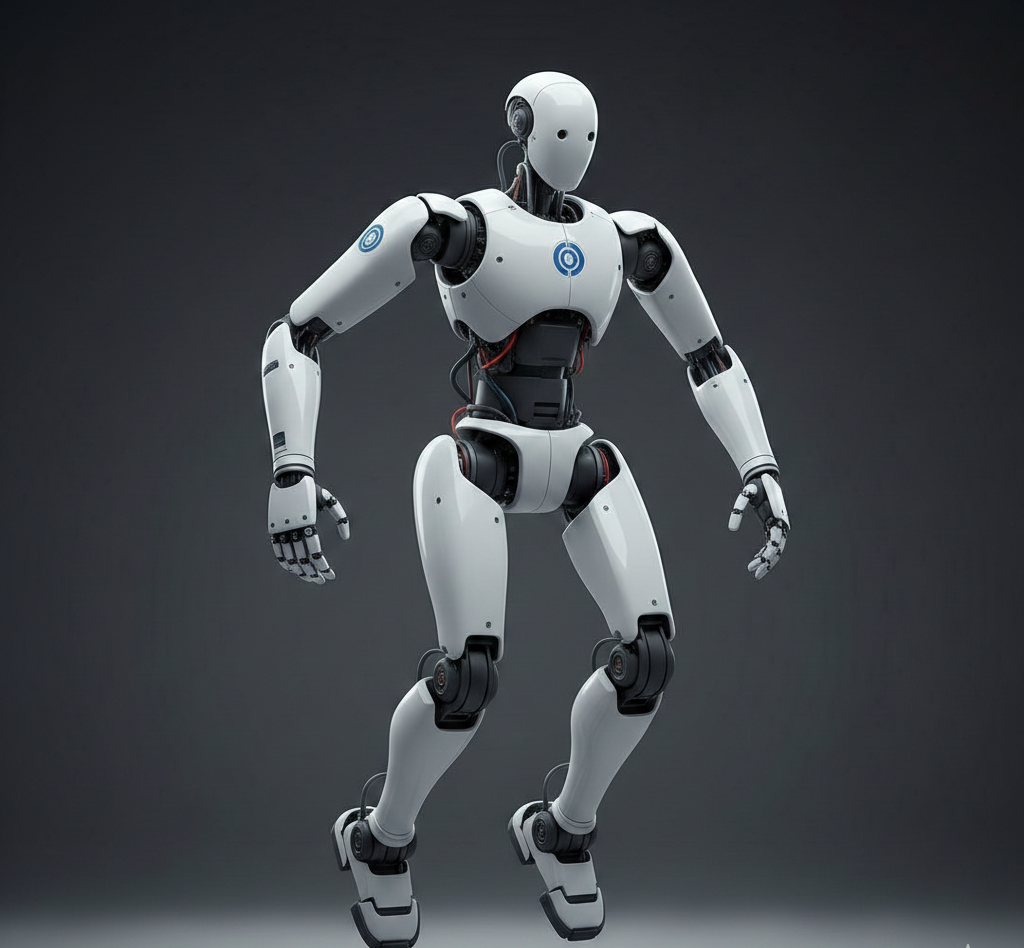
The Hyundai Influence: Precision Engineering Meets AI
Hyundai's acquisition of Boston Dynamics has clearly accelerated the fusion of advanced automotive engineering principles with cutting-edge robotics. This partnership brings:
Refined Actuation Systems: Leveraging Hyundai's expertise in high-precision mechanics and motor control has likely led to even more responsive and powerful hydraulic systems within Atlas, allowing for finer control and greater strength-to-weight ratios.
Manufacturing Scalability: Hyundai's vast manufacturing capabilities are critical for moving Atlas from a marvel of engineering to a deployable, mass-producible solution. Fluid motion is impressive, but fluid production is what brings it to the market.
Integrated Design Philosophy: The collaboration seems to be fostering a holistic design approach where the hardware and software are co-optimized. The fluidity we observe isn't just a software trick; it's deeply embedded in the robot's physical design and responsiveness.
Why Fluidity Matters: The Path to Practicality
This emphasis on fluid motion isn't merely for aesthetic appeal; it's fundamental to making humanoids truly useful and safe:
Efficiency: Smooth movements are energy-efficient movements. Less jerking means less wear and tear on components and longer operational times on a single charge.
Safety: Predictable and fluid motion reduces the risk of collisions or accidents, especially when operating alongside humans. Erratic movements are inherently more dangerous.
Adaptability: A robot that can move fluidly can adapt more easily to unexpected obstacles or changes in its environment, dynamically re-planning its trajectory on the fly.
Acceptance: As robots become more integrated into our lives, their natural, human-like movements will contribute significantly to human acceptance and comfort around them.
Atlas, The Ballet Dancer of Robotics
The latest demonstrations of the Hyundai + Boston Dynamics Atlas robot underscore a pivotal moment. We're moving beyond "robots that can move" to "robots that move well." The newfound fluidity of Atlas isn't just a testament to incredible engineering; it's a critical enabler for the practical humanoid robots that will soon be working alongside us, transforming industries with grace, precision, and an unprecedented level of robotic elegance.
The future of work might just involve a perfectly synchronized ballet of humans and highly fluid machines.