CES 2026: The "Humanoid Moment" Has Arrived – Robots Get Real
For years, CES has featured robots. Cute robots that serve drinks, impressive industrial arms, and even slightly awkward dancing bots. But CES 2026 was different. This year, the buzz wasn't about flashy demos; it was about "the humanoid moment" – a profound shift from performative robotics to practical, real-world humanoid robots designed for genuine utility.
This wasn't just a handful of prototypes; it was a clear signal from leading manufacturers and AI companies that the era of human-like robots performing tangible tasks in our factories, warehouses, and even homes, is no longer a distant sci-fi fantasy, but an imminent reality.
Beyond the Lab: Robots Ready for Work
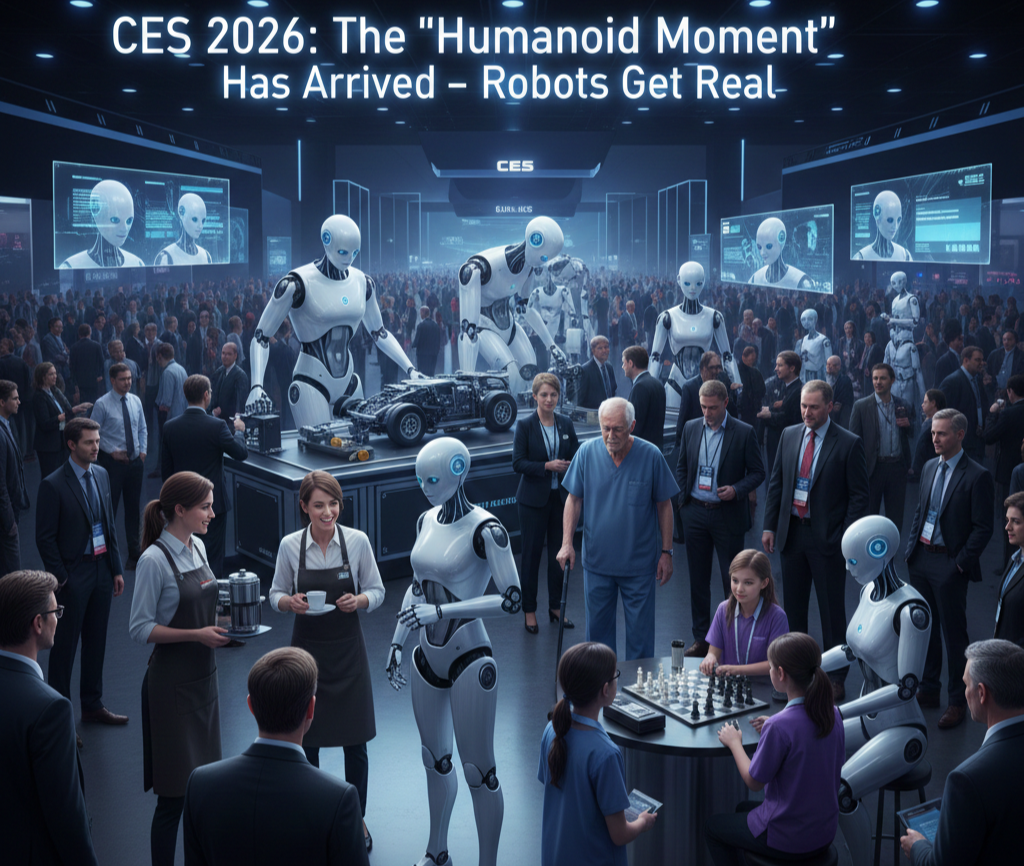
What defined the "humanoid moment" at CES 2026? It was the consistent theme across presentations: these robots are engineered for real tasks, in real environments, with real economic impact.
Manufacturing & Logistics: Companies like Figure AI (with their new Figure 02 model) and Boston Dynamics (showcasing a slimmer, more agile Atlas) demonstrated their humanoids performing complex assembly line tasks, manipulating tools, and navigating chaotic warehouse floors. The focus was on robustness, dexterity, and endurance, not just agility.
Service & Support: Several startups unveiled humanoids designed for hospitality, elderly care, and even light retail assistance. These robots featured enhanced natural language processing and advanced grasping capabilities, allowing them to interact more intuitively with humans and perform delicate tasks like stocking shelves or pouring drinks.
The "Dirty, Dull, Dangerous" Jobs: A significant portion of the conversation revolved around using humanoids to take on jobs that are difficult, unsafe, or monotonous for humans. This wasn't just hypothetical; actual deployment timelines and cost-benefit analyses were presented.
The Power Behind the Progress: Why Now?
This isn't a sudden leap. The "humanoid moment" at CES 2026 is the culmination of several converging technologies:
Advanced AI & Foundation Models: The rapid development of large language models (LLMs) and, more critically, world models (like Nvidia's Cosmos), provides humanoids with the "brain" to understand complex instructions, reason about their environment, and adapt to unforeseen circumstances.
High-Performance Edge Compute: As discussed in our previous blog, new chips from AMD (Ryzen AI Embedded P100) and Nvidia (Jetson T4000) are bringing data center-level AI inferencing directly to the robot itself. This allows for real-time decision-making without constant cloud reliance, crucial for safety and responsiveness.
Improved Actuation & Sensory Systems: Motors, sensors, and end-effectors have reached new levels of precision, strength, and durability. Robots can now "feel" their environment with unprecedented detail, allowing for delicate manipulation and safe interaction.
Better Batteries: Advances in battery technology are finally providing the sustained power needed for humanoids to operate for full shifts, overcoming a major practical hurdle.
The Road Ahead: Challenges and Opportunities
While the excitement was palpable, industry leaders were also realistic about the journey ahead.
Cost & Scalability: The initial cost of these advanced humanoids remains high, but manufacturers are projecting significant reductions as production scales.
Training & Integration: Integrating humanoids into existing workflows requires careful planning, safety protocols, and robust training for human co-workers.
Ethical Considerations: The "humanoid moment" also sparked deeper discussions about the societal impact of these robots, including job displacement and the need for ethical guidelines in their design and deployment.
The Future Walks Among Us
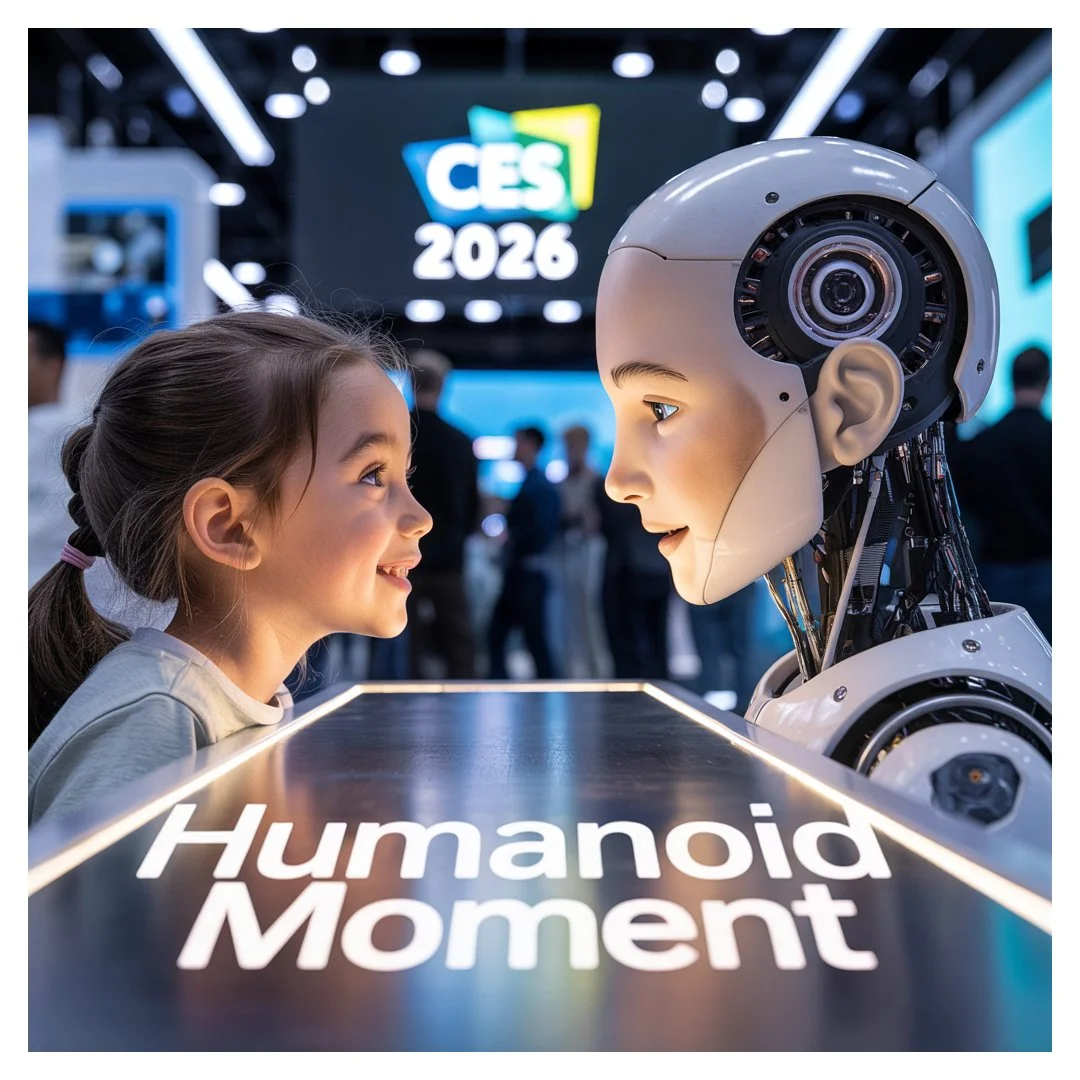
CES 2026 marked a pivotal point in robotics. We are no longer marveling at what robots can do in controlled environments; we are witnessing the birth of a new generation of humanoids ready to step into the real world and tackle its challenges. The "humanoid moment" is here, and it promises to redefine industries, reshape workforces, and fundamentally alter our relationship with intelligent machines.