AMD’s "Yotta-Era" Ambitions: How CES 2026 Redefined the AI Silicon Race
The AI chip wars just hit a new gear. At CES 2026, AMD Chair and CEO Dr. Lisa Su delivered a keynote that didn't just announce new products—it laid out a manifesto for the "Yotta-scale" era. With the unveiling of the Instinct MI455, the enterprise-focused MI440X, and a jaw-dropping roadmap for the MI500 series, AMD has sent a clear message: the era of Nvidia’s unchallenged dominance is facing its most serious threat yet.
The New Flagship: Instinct MI455 and the Helios Rack
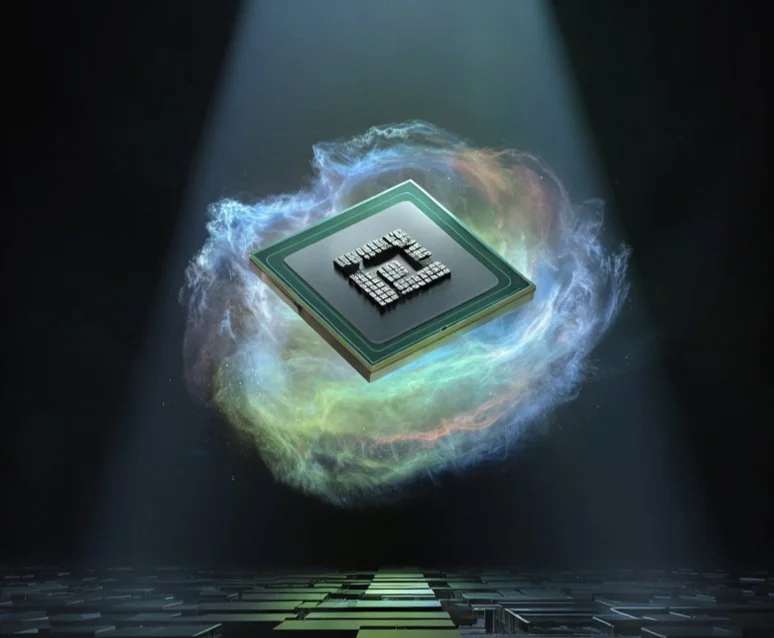
The star of the show was undoubtedly the Instinct MI455 GPU. Built on a cutting-edge mix of 2nm and 3nm process technologies, this chip is designed to tackle the world’s most demanding trillion-parameter models.
The MI455 isn't just a marginal upgrade; it’s a leap in density and bandwidth. Each GPU boasts 432 GB of HBM4 memory and a massive 20 TB/s of memory bandwidth. To put that in perspective, this allows for models roughly 50% larger to be run entirely in-memory compared to previous generations.
AMD also debuted the Helios AI Rack, a massive liquid-cooled "blueprint" for future data centers.
Performance: Up to 3 AI exaflops in a single rack.
Configuration: 72 MI455 GPUs paired with the new "Venice" EPYC CPUs (featuring up to 256 Zen 6 cores).
Target: Directly competing with Nvidia’s high-end Blackwell and Vera Rubin NVL72 systems.
Expanding the Front: Enterprise and Edge AI
While hyperscalers like OpenAI (who joined Su on stage to confirm a massive 6-gigawatt deployment) are the primary audience for the MI455, AMD is also targeting the "on-prem" corporate world.
Instinct MI440X: A specialized enterprise GPU designed for business data centers. Unlike the massive rack-scale Helios, the MI440X is optimized for 8-GPU systems, making it the go-to for companies looking to fine-tune and run private AI models securely within their own walls.
Ryzen AI 400 Series: AMD isn't forgetting the PC. With the new XDNA 2 NPU, these chips deliver 60 TOPS of AI performance, handily exceeding Microsoft’s Copilot+ requirements and bringing robust AI power to ultra-thin laptops.
The Road to 1,000x: The MI500 Series
Perhaps the most shocking moment of the keynote was the "sneak peek" at the Instinct MI500 series, slated for 2027. AMD claims the MI500, built on the CDNA 6 architecture, will offer a 1,000-fold increase in AI performance over the MI300X from 2023.
While "1,000x" is a bold marketing claim that likely factors in architectural shifts, new data formats (like FP4), and system-level scaling, it signals AMD's commitment to an aggressive annual launch cadence.
Why This Matters for the Market
For years, the narrative has been "Nvidia first, everyone else later." But the tide is turning. Here is why AMD's CES showcase is a pivot point:
Supply Diversification: With OpenAI and Oracle signing on as lead partners, the industry is moving toward a multi-vendor ecosystem to avoid Nvidia supply bottlenecks.
The Memory Advantage: By being first to scale with massive HBM4 capacities, AMD is winning on "memory-bound" workloads—the exact type of work required for the next generation of LLMs.
Open Software: AMD’s ROCm 7.2 software stack is finally maturing, closing the "CUDA moat" that previously made switching away from Nvidia difficult for developers.
Final Thoughts: A New Power Balance
AMD’s 2026 lineup isn't just about matching Nvidia; it’s about offering a distinct vision of open, modular, and scalable AI. Whether it’s the yotta-scale ambitions of the MI455 or the local privacy of the MI440X, AMD has proven they have the silicon to back up their seat at the head of the table.