Waymo’s Autonomous Driving AI: Building the World’s Most Experienced Driver
Waymo, a subsidiary of Alphabet Inc., has transformed from Google’s self-driving car project into a global leader in autonomous mobility. With over 100 million fully autonomous miles logged and hundreds of thousands of rider-only trips completed, Waymo is redefining what it means to be the “world’s most experienced driver.” Its mission is clear: make transportation safer, more accessible, and sustainable through cutting-edge AI and robotics. [fifthlevel...ulting.com], [therobotreport.com]
The Waymo Driver: A Fusion of AI and Sensor Technology
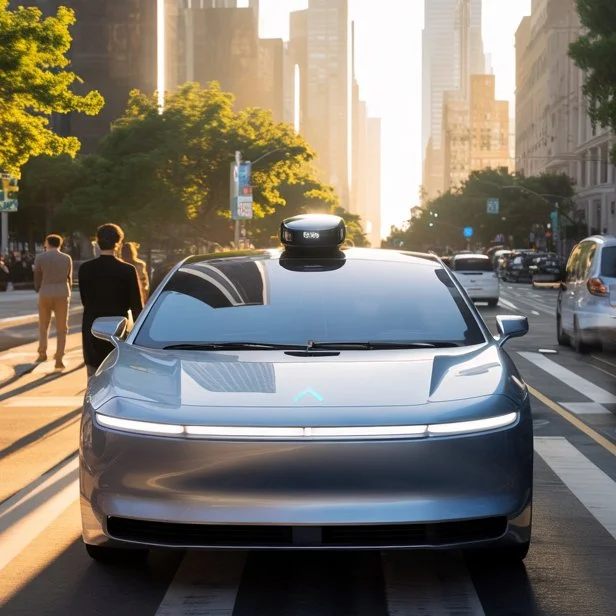
At the heart of Waymo’s success is the Waymo Driver, an advanced AI system that integrates multiple layers of perception, prediction, and planning. Unlike camera-only approaches, Waymo employs a sensor fusion strategy combining:
LiDAR: Creates precise 3D maps for accurate object detection.
Radar: Detects object velocity and performs well in adverse weather.
High-resolution cameras: Capture visual details like traffic signals and lane markings.
Audio sensors: Detect emergency vehicle sirens and other auditory cues.
This multi-modal sensing provides a 360° real-time view, enabling the Waymo Driver to navigate complex environments safely—even in fog, rain, or snow. [insightpul...liceron.in], [tech.yahoo.com], [usatoday.com]
AI Architecture: Predicting the Unpredictable
Waymo’s AI stack is among the most sophisticated in the industry. It uses:
Deep Learning for Perception: Neural networks trained on billions of miles of data for object detection and semantic segmentation.
Behavior Prediction Models: Advanced algorithms, including LSTM networks and Transformer-based modules, forecast the actions of pedestrians, cyclists, and vehicles.
Planning & Control: Generates safe trajectories under uncertainty, factoring in speed, road geometry, and dynamic obstacles.
Recent innovations include hybrid prediction models that combine LSTM encoders with Transformer interaction layers, improving trajectory forecasting in dense urban traffic. [techrxiv.org]
Fleet Learning: Scaling Safety Through Experience
Every mile Waymo drives—whether in San Francisco fog or Detroit snow—feeds into a shared learning system. This fleet-wide knowledge base allows rapid updates across all vehicles, making the entire network smarter with each new scenario. In simulation, Waymo can compress a lifetime of human driving experience into minutes, accelerating progress exponentially. [waymo.com]
Safety: The Core Metric
Waymo’s safety record is unmatched. Compared to human drivers, the Waymo Driver has achieved:
91% fewer serious injury crashes
79% fewer airbag deployment crashes
92% fewer pedestrian injury crashes
Independent studies confirm that Waymo vehicles are 10 times safer than human-driven cars, thanks to conservative decision-making and rigorous validation protocols. [waymo.com], [humanprogress.org]
Expanding Horizons: From Sun Belt to Snow Belt
Waymo is no longer confined to warm-weather cities. With recent expansions into Detroit and Denver, its sixth-generation Waymo Driver now handles snow and ice using heated, self-cleaning sensors and advanced perception algorithms. This marks a major step toward true all-weather autonomy. [gizmodo.com], [usatoday.com]
The Road Ahead
Waymo’s vision extends beyond robotaxis. Future plans include:
Freeway Autonomy: Fully driverless rides on highways in Los Angeles, Phoenix, and San Francisco.
Global Expansion: Testing in Tokyo and partnerships with automakers like Toyota.
Next-Gen AI Models: Incorporating foundation models and V2X connectivity for smarter, more adaptive driving. [aol.com], [mckinsey.com], [selfdrivenews.com]
Waymo isn’t just building a self-driving car—it’s creating a transportation ecosystem powered by the most experienced driver on Earth. With its relentless focus on safety, scalability, and innovation, Waymo is paving the way for a future where mobility is autonomous, inclusive, and sustainable.