Vibe Coding 2.0: From Description to Deployment in Seconds
The dream of rapidly translating an idea into a functional piece of software has long been the holy grail for developers and entrepreneurs alike. We’ve moved from punch cards to integrated development environments, from waterfall to agile, all in the pursuit of faster, more efficient creation. Now, with the advent of advanced AI, we’re standing at the precipice of another monumental leap: Vibe Coding 2.0 – the ability to go from a high-level description to a deployed application in mere seconds.
Imagine no longer writing lines of code, but instead describing your desired application in natural language. Not just the features, but the feeling, the vibe of the user experience. "I need an app that helps users track their daily water intake, with a calming blue aesthetic, encouraging notifications, and a simple, intuitive interface for logging." And then, almost instantaneously, an application is generated, tested, and deployed, ready for users to interact with. This isn't science fiction; it's the future that Vibe Coding 2.0 promises.
What is Vibe Coding 2.0?
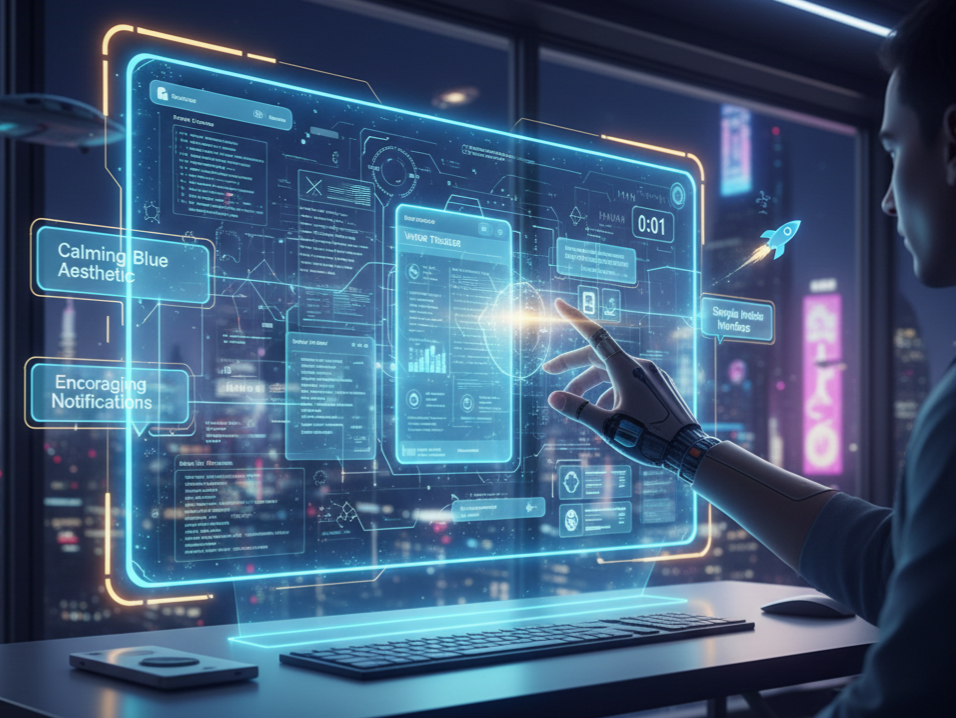
At its core, Vibe Coding 2.0 leverages highly advanced Generative AI models, not just to write code, but to understand intent, user experience, and deployment environments. It goes beyond simple code generation to encompass:
Intent-Driven Development: You articulate your vision, your desired outcome, and the "vibe" or emotional response you want your application to evoke. The AI interprets this holistic description.
Full-Stack Generation: The AI doesn't just produce front-end or back-end code; it generates the entire stack – database schemas, API endpoints, UI components, business logic, and even basic infrastructure as code.
Automatic Testing & Validation: Built-in AI agents automatically generate test cases, run them against the generated code, identify potential bugs or inconsistencies, and iterate on the code until it meets defined criteria.
Instant Deployment: Integration with cloud platforms and serverless technologies allows the AI to not only generate the application but also to deploy it to a live environment, making it accessible almost immediately.
Iterative Refinement: You can provide feedback in natural language ("Make the button green," "Add a 'share' feature," "Optimize for mobile devices"), and the AI quickly adjusts and redeploys.
Beyond the Hype: How Does it Work?
The underlying technology combines several cutting-edge AI advancements:
Large Language Models (LLMs) & Multimodal AI: These models have evolved to understand not just text, but also design principles, user experience patterns, and deployment configurations. They're trained on vast datasets of code, UI/UX designs, deployment scripts, and user feedback.
Code Generation & Synthesis: Sophisticated AI agents can synthesize correct, efficient, and secure code in various programming languages and frameworks.
Automated Reasoning & Planning: AI planning systems break down the high-level request into smaller, manageable tasks, orchestrate the generation of different components, and ensure their seamless integration.
Reinforcement Learning for Optimization: AI continuously learns from deployment outcomes and user feedback, refining its generation process to create better, more robust applications over time.
The Impact of Vibe Coding 2.0:
Democratization of Software Creation: Anyone with an idea, regardless of their coding expertise, can bring their vision to life. This unlocks a new wave of innovation.
Accelerated Prototyping: Startups and enterprises can rapidly prototype new ideas, test market demand, and iterate on products at unprecedented speeds.
Focus on Innovation, Not Implementation: Developers can shift their focus from the mundane task of writing boilerplate code to higher-level design, strategic thinking, and complex problem-solving.
Bridging the Gap Between Business and Tech: The ability to describe requirements in natural language eliminates many communication barriers, leading to better alignment and outcomes.
Reduced Development Costs: Significant savings in development time and resources.
While Vibe Coding 2.0 is still an emerging paradigm, the foundational technologies are maturing at an incredible pace. The promise of going from a descriptive "vibe" to a live application in seconds is not just about speed; it's about fundamentally changing how we conceive, create, and interact with software, making innovation truly instantaneous.