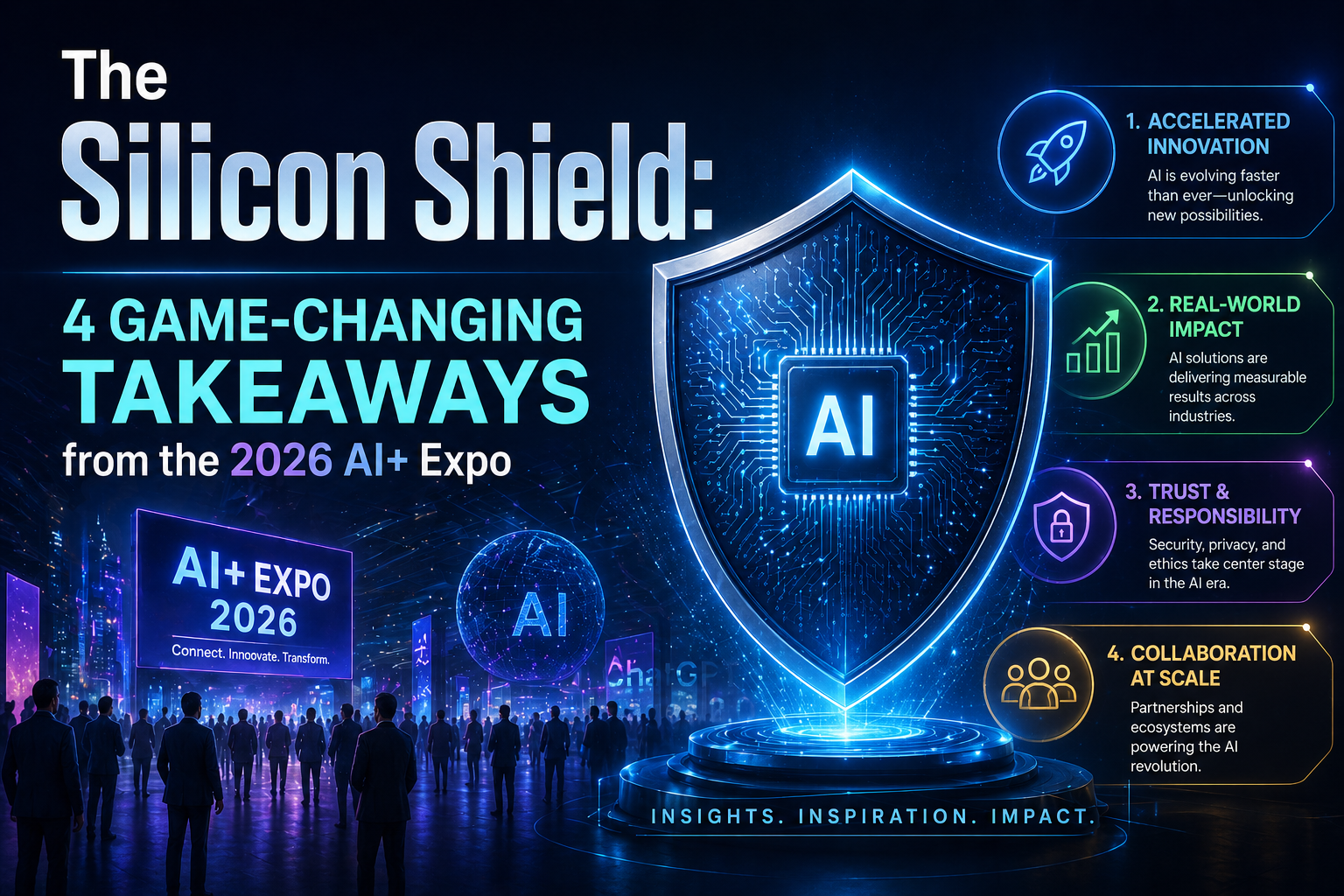
The Silicon Shield: 4 Game-Changing Takeaways from the 2026 AI+ Expo
The AI+ Expo in Washington D.C. just wrapped up, and the atmosphere was electric—part tech conference, part high-stakes strategy session. With over 20,000 leaders from the Pentagon, Silicon Valley, and allied nations in attendance, the message was clear: AI is no longer a "support function" in defense. It is the foundation of modern sovereignty.
From "Agentic Warfare" to the return of the industrial base, here are the four biggest takeaways that will define global security for the rest of the decade.
1. From Chatbots to "Agentic" Soldiers
The buzzword of the expo wasn't just "AI"—it was Agentic AI.
While last year was about LLMs that could summarize reports, 2026 is about Autonomous Agents that can navigate complex, multi-domain environments.
The Takeaway: Justin Needles (CTO at Indo-Pacific Command) emphasized that "Context is King." We are moving toward mission-specific AI architectures that don't just find data, but act on it—correlating disparate global intelligence feeds and preparing ready-to-use dashboards for analysts in minutes, rather than weeks.
2. The "Speed Wins" Doctrine
The Department of War (DOW) and the Air Force made a major splash by unveiling their 2026 AI Strategy. The goal? To become an AI-first force.
Rapid Acquisition: The government is officially at war with its own "antiquated" procurement systems. The new strategy prioritizes "Speed over Exquisiteness," meaning they’d rather deploy a 90% capable AI tool today than a 100% perfect one in five years.
Operationalizing Data: Data is now officially viewed as the "ammunition of modern warfare." The expo showcased new decentralized data architectures that get trusted info to the "edge" (the soldiers on the ground) at the speed of mission.
3. Lessons from the Digital Trenches (Ukraine & Taiwan)
In a packed session titled Innovation Under Fire, experts analyzed live lessons from the front lines.
The Drone Revolution: Boston Dynamics and other robotics giants demonstrated "AI-Powered Spot" units and autonomous rail networks. We’ve moved beyond simple remote-controlled drones; the new standard is Swarm Intelligence, where hundreds of low-cost units coordinate their own movements to overwhelm a target's defenses.
The China Challenge: A significant portion of the expo was dedicated to the "view from Taiwan," focusing on how AI-driven supply chain resilience is the best deterrent against economic or physical conflict.
4. "Project Maven" and the Ethical Guardrails
With Katrina Manson’s talk on Project Maven, the ethical debate was front and center. As AI takes on more "agency," the question of human control becomes a legal minefield.
The "Human Agency" Mandate: Despite the rush for speed, the consensus remained: Human agency must be preserved. The expo highlighted new frameworks for "Responsible Industry Behavior," ensuring that while AI can identify a target or fly a jet, the final "Go/No-Go" decision remains human-led.
Expo Spotlight: The Defense Tech Stack
Technology Status in 2026 Impact
Edge Computing Production Ready Moves the "brain" of the AI onto the soldier's helmet/gear.
Agentic Coding 87% Efficiency AI agents now write and patch battlefield software in real-time.
Bio-Defense AI Emerging Using AI for rapid drug discovery to counter biological threats.
Cognitive EW Testing Electronic Warfare systems that "learn" and jam new signals instantly.
The Verdict
The 2026 AI+ Expo proved that the "New Cold War" is being fought in the data center as much as on the battlefield. The winner won't be the side with the most soldiers, but the side with the most coordinated intelligence.
As Secretary of the Air Force Troy Meink put it: "We are not developing AI for its own sake, but to out-think and out-pace any adversary."
Does the idea of "Agentic AI" in the military make you feel more secure, or are you concerned about the loss of human control?