The Rise of Prompt Injection 2.0: How Attackers Are Evolving Their Tactics in 2026
The year 2026 has ushered in a new era for artificial intelligence, with large language models (LLMs) and multimodal AI becoming integral to enterprise operations. From automating customer service to generating complex code, AI's utility is undeniable. Yet, with great power comes evolving threats. We're now witnessing the "Prompt Injection 2.0" era, where attackers are no longer just tricking chatbots; they're subtly manipulating entire AI systems to serve their malicious ends.
Beyond the Basic Override: What is Prompt Injection 2.0?
Remember the early days when a simple "ignore previous instructions" could hijack a chatbot? That was Prompt Injection 1.0. Today, the landscape is far more sophisticated. Prompt Injection 2.0 isn't about brute-forcing an override; it's about contextual subversion, data poisoning, and multi-stage manipulation that exploits the inherent complexities of advanced AI systems.
Here's how attackers are evolving their tactics:
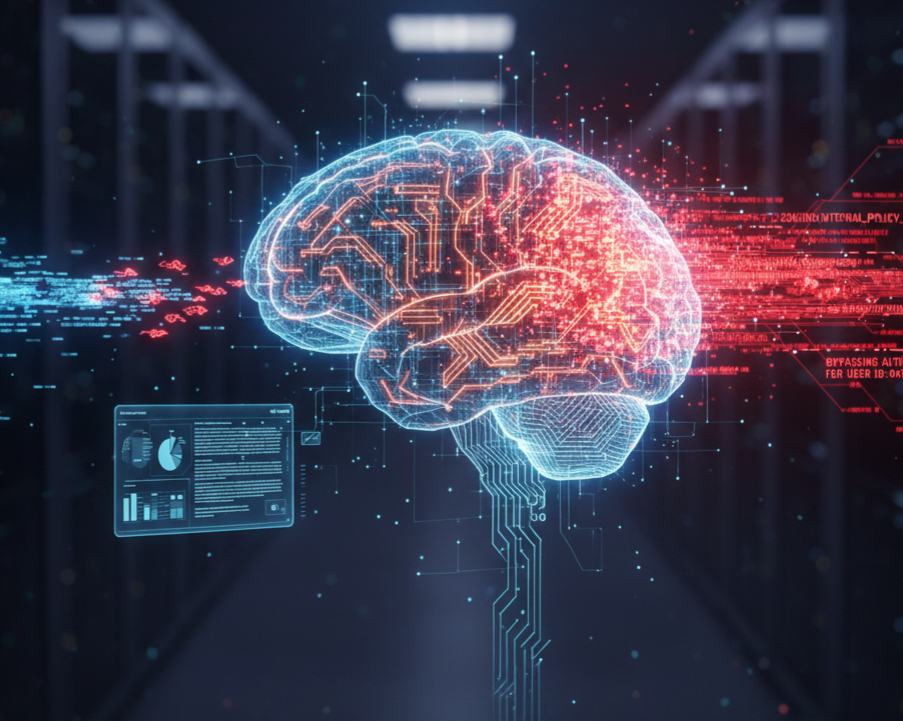
Stealthy Contextual Manipulation: Attackers are now embedding malicious instructions not as direct commands, but as seemingly innocuous data points within larger datasets. Imagine a customer support AI trained on thousands of interactions. An attacker might subtly inject a "customer query" that, when processed, leads the AI to believe it needs to leak specific internal policies or bypass an authentication step for a "priority user." The prompt isn't directly injected by a user, but rather activated by the AI's processing of legitimate-looking data.
Multimodal Attack Vectors: With the rise of multimodal AI, prompt injection is no longer limited to text. Attackers are now leveraging images, audio, and even video to embed hidden commands. An AI designed to transcribe meetings might encounter an audio file with imperceptible ultrasonic commands. A visual AI analyzing documents might process an image containing embedded text that, while invisible to the human eye, is perfectly legible to the AI, instructing it to redact or alter specific information.
Chaining Injections for Complex Exploits: Attackers are now stringing together multiple, subtle prompt injections across different AI agents or stages of an automated workflow. One injection might grant access to a specific database, while a second, activated by the first, then exfiltrates sensitive information, and a third covers the tracks. This "chain reaction" approach makes detection incredibly difficult, as each individual prompt might seem harmless in isolation.