Qualcomm: Bringing the AI Revolution to the Edge
The future of Artificial Intelligence isn't just in massive cloud data centers—it's right here, in the palm of your hand, under the hood of your car, and embedded in the smart devices that power our world. This is the Intelligent Edge, and no company is more central to its realization than Qualcomm.
By leveraging its decades of expertise in power-efficient, high-performance computing, Qualcomm is moving the power of AI inference from the cloud directly onto the device. This shift, known as Edge AI or On-Device AI, is fundamentally changing user experiences across phones, cars, and the Internet of Things (IoT).
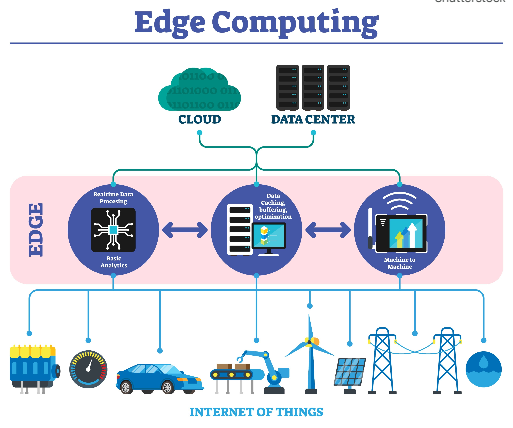
What is AI at the Edge?
Edge AI is the practice of running Machine Learning (ML) models—like those for image recognition, natural language processing, or generative AI—locally on a device rather than sending all the data to a remote cloud server for processing.
The transition to edge-based AI is driven by four major benefits:
⚡ Reduced Latency: Processing data locally delivers instant results, which is critical for real-time applications like autonomous driving or live translation.
🔒 Enhanced Privacy and Security: Sensitive user data stays on the device, never having to be transmitted to the cloud.
🔋 Greater Efficiency: Utilizing specialized silicon, like Neural Processing Units (NPUs), on the device is dramatically more power-efficient than constantly communicating with a distant data center.
Shutterstock
🌐 Reliable Connectivity: AI features remain functional even in areas with poor or no internet connection.
📱 Phones: The Ultimate Personal AI Assistant
The smartphone is the most personal and pervasive edge device, and Qualcomm's Snapdragon platforms are the engine driving its AI revolution.
On-device AI, powered by the Qualcomm AI Engine (which intelligently coordinates the CPU, GPU, and dedicated Hexagon NPU), is already enhancing the features you use every day:
Computational Photography: Instant image enhancements, object recognition, and professional-grade video effects.
Generative AI: Running large language models (LLMs) and image generators like Stable Diffusion directly on the phone for personal, private content creation and coding assistance.
Always-On Sensing: Ultra-low power AI that recognizes voice commands or ambient context without draining the battery.
This on-device intelligence is transforming the phone from a static tool into an AI Agent that can anticipate needs and personalize experiences in real-time.
🚗 Cars: Redefining the Driving Experience
The automotive industry is in the midst of a digital transformation, and Qualcomm's Snapdragon Digital Chassis is at its core. Edge AI is essential for the future of intelligent vehicles, where real-time decision-making is a matter of safety.
Key applications include:
Advanced Driver Assistance Systems (ADAS): Real-time object detection, lane-keeping, and predictive maintenance running on-board to ensure instant reaction times.
In-Cabin Personalization: Facial and voice recognition to automatically adjust seat settings, music preferences, and even driver-distraction monitoring.
Context-Aware Navigation: AI models that learn traffic patterns and driving style to offer more intelligent route suggestions.
🏭 IoT: Intelligence Everywhere
The Internet of Things spans everything from smart cameras and factories to retail spaces and smart cities. Qualcomm's edge AI chips, such as the Dragonwing and QCS series, are bringing sophisticated intelligence to these diverse environments.
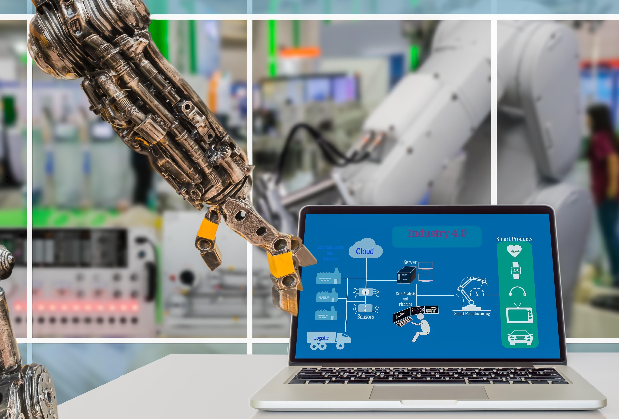
Smart Factories: Edge AI enables real-time predictive maintenance and defect detection on the assembly line, improving efficiency and reducing downtime.
Security and Surveillance: Smart cameras can perform on-device object classification and face recognition, immediately alerting personnel to anomalies without the need to stream all video footage to the cloud.
Shutterstock
Retail: In-store AI handles inventory management, frictionless payments, and customer flow analysis, giving retailers immediate, actionable insights.
The Path Forward: A Unified AI Stack
Qualcomm's long-term vision is an Edge-to-Cloud Continuum, a unified architecture that allows developers to seamlessly deploy and scale AI models from a smartphone to an edge server using the same tools and software stack.
By focusing on high-performance, low-power inference, Qualcomm is not just riding the AI wave—it's actively shaping the foundational hardware and software ecosystem for intelligent computing everywhere. This commitment ensures that the most exciting and transformative AI experiences are not limited to the data center but are instead distributed to the billions of devices at the edge, making AI truly personal, efficient, and ubiquitous.