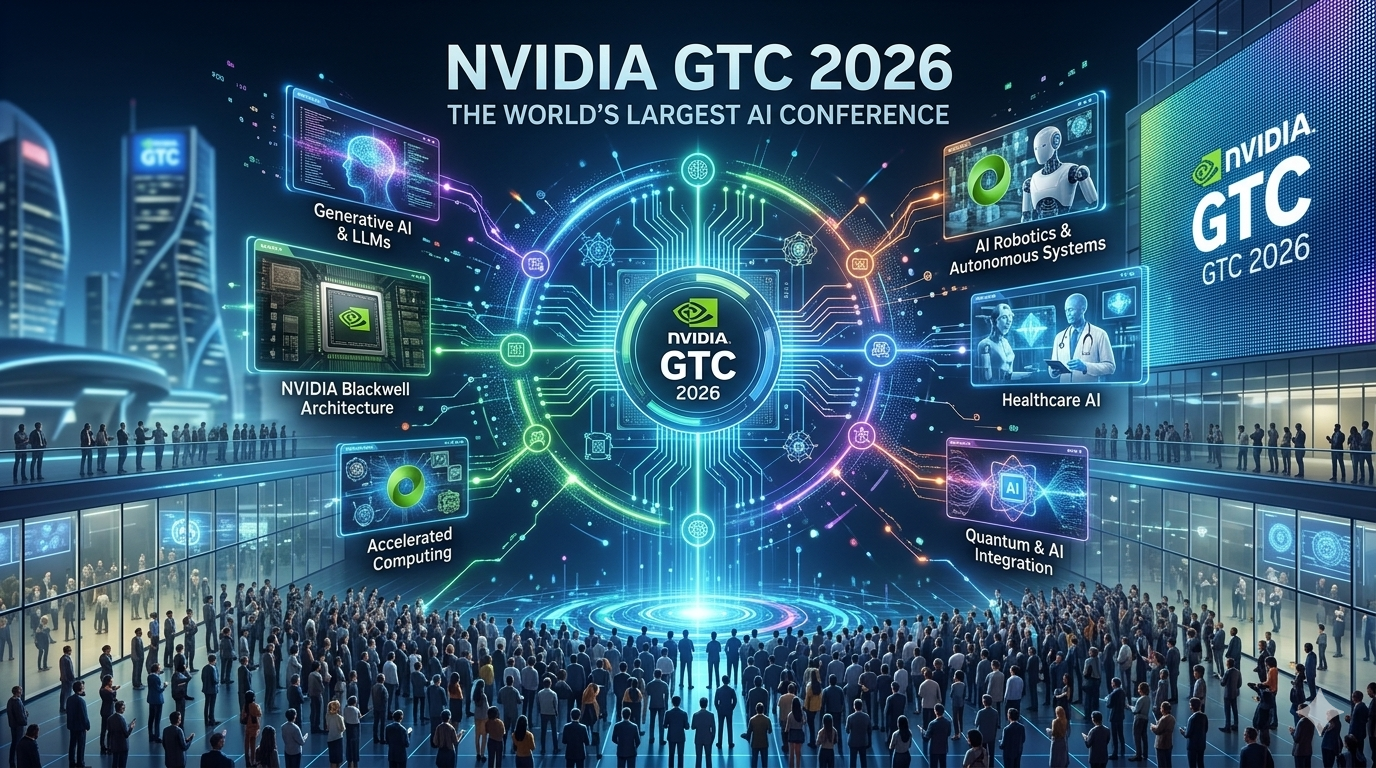
NVIDIA GTC 2026 – The World’s Largest AI Conference
Hold onto your hats, folks! The biggest event in the world of Artificial Intelligence is just around the corner, and it's promising to be more mind-blowing than ever before. NVIDIA GTC 2026 is almost here, and we can't wait to see what groundbreaking advancements are in store for us. From physical AI to cutting-edge research, this conference is set to redefine the boundaries of what's possible in the AI space.
The Rise of Physical AI
One of the most anticipated highlights of GTC 2026 is the growing prominence of physical AI. This emerging field focuses on bridging the gap between digital intelligence and the physical world, enabling robots and other physical systems to interact with and learn from their environment in increasingly sophisticated ways. We expect to see some truly revolutionary announcements in this area, potentially showcasing:
Robotics in Action: Demonstrations of physical AI applications in various industries, from manufacturing and logistics to healthcare and service robotics. Imagine robots that can autonomously perform complex tasks, seamlessly collaborate with humans, and adapt to dynamic and unpredictable environments.
The Fusion of AI and Physics: Research presentations on integrating AI algorithms with physical models to create systems that can understand and reason about the physical world with greater accuracy and efficiency.
The Implications for Society: Discussions on the societal impacts of physical AI, including ethical considerations, job displacement, and the potential for positive transformation.
Previewing Announcements from GTC 2026
But wait, there's more! GTC 2026 is rumored to be packed with exciting announcements that will push the boundaries of AI innovation. While the details are under wraps, here are some predictions and rumors that have been circulating:
New GPU Architectures: NVIDIA is renowned for its powerhouse GPUs, and we anticipate the unveiling of new architectures designed specifically for AI workloads. These new chips will likely offer significant performance improvements, enhanced energy efficiency, and support for the latest AI algorithms.
The Future of DLSS: Deep Learning Super Sampling (DLSS) has revolutionized gaming performance by using AI to upscale images, and we expect to see even more impressive advancements in GTC 2026. This could include real-time Ray Tracing with DLSS, further improving visual quality without compromising performance.
AI for Specific Industries: NVIDIA has been a driving force in applying AI to various industries, and GTC 2026 is likely to showcase innovative solutions for sectors like healthcare, finance, transportation, and entertainment. This could include AI-powered medical diagnostics, predictive financial modeling, autonomous driving technologies, and personalized content creation tools.
The Growing Role of Cloud Computing: Cloud computing is essential for training and deploying large-scale AI models, and we expect to see announcements related to NVIDIA's cloud-based AI offerings. This could include new partnerships with cloud providers, enhanced AI platform features, and more accessible AI tools for developers and researchers.
Low-Precision Computing (FP4/FP6) and Its Impact on Model Efficiency
Another fascinating area to watch at GTC 2026 is the development of low-precision computing, specifically FP4 and FP6. These new data formats offer a compelling trade-off between precision and efficiency, enabling smaller and faster AI models without sacrificing accuracy. This could have a significant impact on:
Edge Computing: Low-precision computing can make it possible to run complex AI models on resource-constrained edge devices, like smartphones, smart sensors, and drones. This will open up new possibilities for on-device AI applications, reducing reliance on the cloud and improving response times.
Energy Efficiency: AI models often require substantial energy to train and run, and low-precision computing can significantly reduce power consumption. This is crucial for sustainable AI development and the adoption of AI in battery-powered devices.
Faster Inference: By using smaller data formats, low-precision computing can speed up inference times, enabling faster predictions and smoother user experiences. This is particularly relevant for real-time applications like autonomous driving and natural language processing.
Beyond the Headlines: Research and Innovation
GTC 2026 isn't just about headline-grabbing announcements; it's also a hub for ground-breaking research and innovation in AI. Attendees can expect to hear from leading experts in the field, learn about the latest trends and techniques, and discover new research breakthroughs. This includes:
Deep Learning Advancements: From novel neural network architectures to improved training methods, GTC 2026 will showcase the latest developments in deep learning. This could include research on self-supervised learning, generative adversarial networks (GANs), and reinforcement learning.
AI Ethics and Fairness: As AI becomes more pervasive, questions around ethics and fairness are becoming increasingly important. GTC 2026 will feature discussions on these crucial topics, focusing on bias mitigation, algorithmic transparency, and the responsible use of AI.
The Intersection of AI and Art: AI is increasingly being used in creative fields, and GTC 2026 will explore the fascinating intersection of AI and art. This could include AI-powered content generation, interactive art installations, and the role of AI in creative workflows.
Stay Tuned for Real-Time Updates!
GTC 2026 promises to be an extraordinary event, full of exciting developments and inspiring ideas. Whether you're an AI researcher, a developer, an entrepreneur, or simply curious about the future of technology, this conference is a must-see. Make sure to stay tuned for our real-time updates and in-depth coverage of GTC 2026, where we'll bring you all the latest news, announcements, and insights from the world of AI!