How Startups Are Building Entire Products with AI Alone
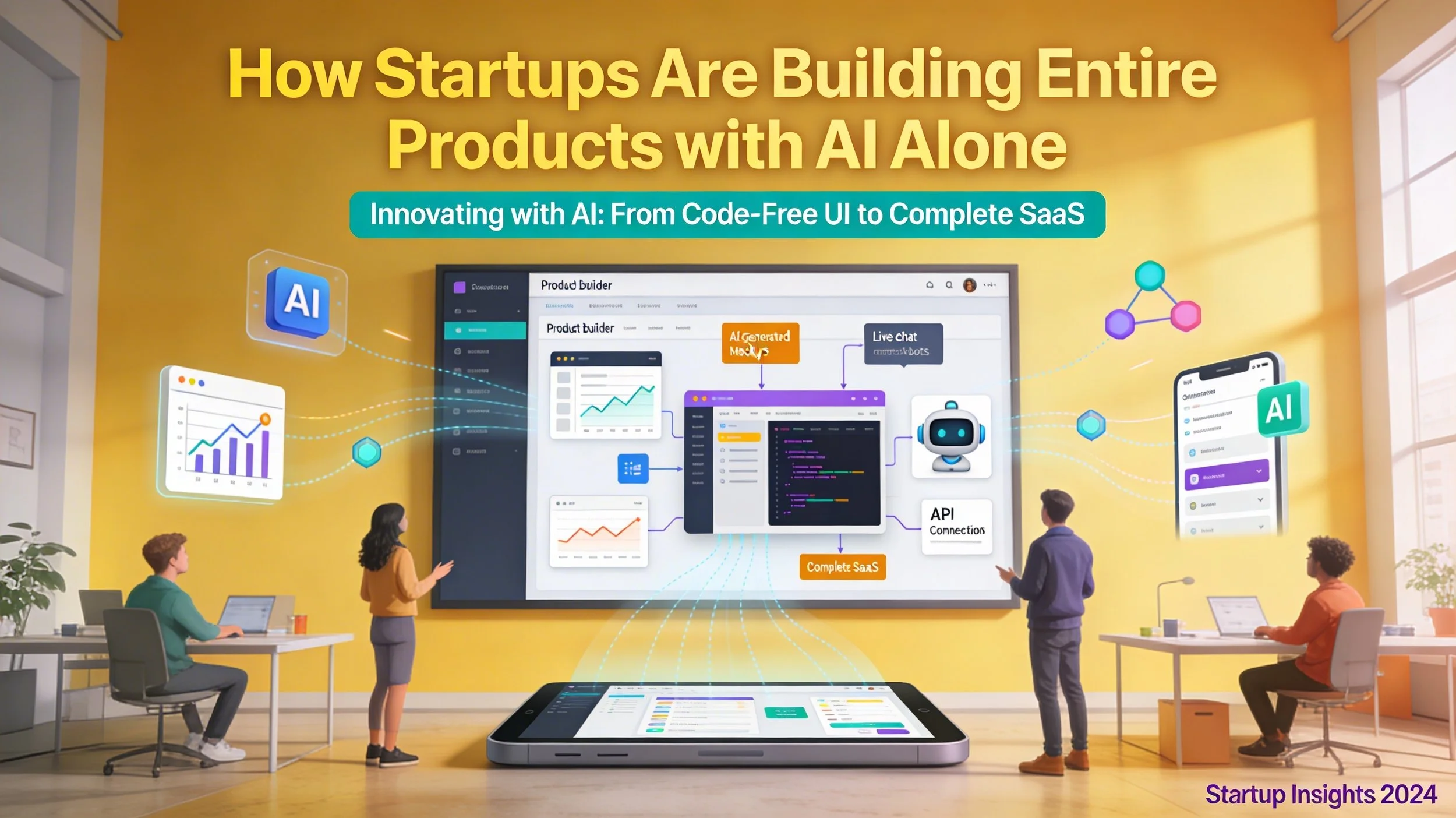
In 2026, the "startup team" is undergoing a radical transformation. We’ve moved past the era of AI as a simple assistant; we are now in the age of the AI-Native Startup. Today, founders are launching sophisticated, revenue-generating products where AI isn't just a feature—it's the entire workforce.
Here is how the next generation of "One-Person Unicorns" is building end-to-end products using only AI.
The Shift from "Co-Pilot" to "Autopilot"
The traditional startup journey used to require a technical co-founder, a designer, and a marketing lead. In 2026, that "founding team" is often a single human orchestrating a multi-agent system.
Instead of writing every line of code, founders use "vibe coding" environments. They describe a problem in natural language, and AI agents architect the database, write the front-end, and deploy the cloud infrastructure.
1. Architecting with Context Engineering
The secret weapon of AI-only startups isn't just better prompts—it's Context Engineering. Founders now build "Project Manifests" (like CLAUDE.md or AI-INSTRUCTIONS.json) that act as a permanent memory for their AI agents. This allows the AI to understand the entire product roadmap, brand voice, and technical constraints, ensuring every new feature stays perfectly aligned without human oversight.
2. The Rise of the "Agent Swarm"
Startups are replacing departments with specialized agent swarms.
The Coding Agent: Uses tools like Cursor or GitHub Copilot to manage the entire codebase.
The Growth Agent: Researches leads, drafts personalized outreach, and manages social distribution.
The Ops Agent: Connects fragmented tools like Shopify, Stripe, and Slack using automation platforms like Make or Parabola to handle the "boring" back-office work.
3. Vertical AI: Solving Specific Problems
The most successful AI-only products in 2026 aren't generic "chatbots." They are Vertical AI solutions—tools designed for hyper-specific niches.
Example: A solo founder might build an AI that specifically handles "Legal Compliance for Drone Startups" or "Automated Inventory Recovery for Boutique E-commerce."
By focusing on a narrow vertical, the AI can be trained on specialized data that makes it more accurate than any general-purpose model.
4. Shipping at "Vibe Speed"
Because AI doesn't need sleep or meetings, development cycles have collapsed. What used to take a team three months to build (an MVP) now takes a solo founder roughly 48 to 72 hours. This allows startups to test ten different product ideas in the time it used to take to launch one, pivoting instantly based on real-time data.
The New Role of the Founder
In this new landscape, the most valuable skill isn't coding or graphic design—it’s Orchestration. The modern founder is a conductor, choosing which AI models to use, setting the ethical guardrails, and defining the "outcome" the product needs to achieve.
The barrier to entry has never been lower, but the bar for "useful" has never been higher. As AI handles the execution, the human's job is to provide the vision and the empathy that technology alone cannot replicate.