The humble data center is dead. Or rather, the traditional image of rows of air-cooled servers drawing power from a stable grid is quickly becoming a relic of the past. As we hurtle towards 2026, a perfect storm of unprecedented AI demand, physical space constraints, and a buckling energy grid is forcing data centers to evolve into something entirely new: self-sufficient, high-tech power plants.
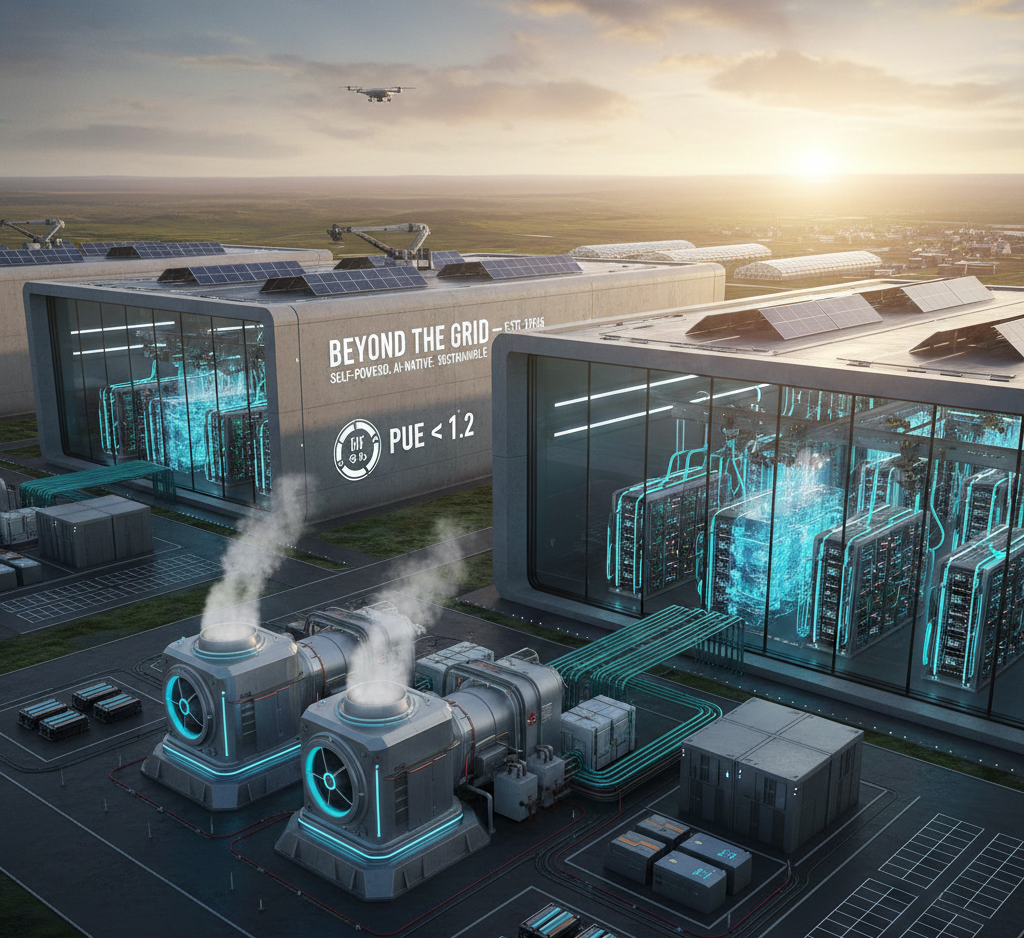
The AI Supercycle: A Power Thirst Like Never Before The insatiable appetite of Artificial Intelligence is the primary driver behind this transformation. Generative AI, large language models, and the intricate neural networks powering everything from autonomous vehicles to drug discovery require computational power on a scale previously unimaginable. The standard 12-15 kW server rack of yesterday simply cannot cope.
By 2026, we're projecting average rack densities to skyrocket to an astounding 100-140 kW. To put that in perspective, a single rack will soon demand more power than an entire small office building. This isn't just about plugging in more machines; it's a fundamental shift in infrastructure design.
Liquid Cooling: From Niche to Necessity You can't air-cool a nuclear reactor, and soon, you won't be able to effectively air-cool an AI data center. The sheer heat generated by these high-density racks makes traditional cooling methods obsolete. This is why 2025 and 2026 will be defined by the widespread adoption of liquid cooling.
Direct-to-chip liquid cooling and even full immersion cooling are moving from experimental labs to standard deployment. This isn't just about managing heat; it's about efficiency. New environmental regulations, particularly in Europe, are pushing for Power Usage Effectiveness (PUE) ratios below 1.2. Liquid cooling is a critical enabler of this, allowing for significantly more efficient heat transfer and, in some cases, even waste heat recovery, where excess heat is repurposed for district heating or other industrial uses.
The Grid Bottleneck: Data Centers Go Off-Road Perhaps the most significant and disruptive trend is the looming energy crisis. In prime data center hubs like Northern Virginia, London, or Dublin, the wait for new grid connections can stretch to a staggering 5 to 10 years. The existing electrical infrastructure simply wasn't designed for the explosive, concentrated demand of the AI era.
This bottleneck is forcing data center operators and tech giants to think "beyond the grid." By 2026, we will see a dramatic increase in "Behind-the-Meter" power generation. This means data centers are becoming proactive energy producers, deploying their own microgrids powered by everything from massive battery storage and advanced natural gas generators to, increasingly, small modular nuclear reactors (SMRs).
Imagine a data center campus that is not just a consumer but a self-sufficient energy ecosystem, capable of islanding from the main grid or even feeding surplus power back into it. This isn't science fiction; it's the architectural blueprint for the future. Major players are already acquiring land adjacent to nuclear power plants, guaranteeing a constant, carbon-free energy supply directly at the source.
Sovereign AI and the Distributed Future Beyond power, geopolitical considerations are also shaping this evolution. The rise of "Sovereign AI" initiatives, particularly in Europe and Asia, means data isn't just seeking power; it's seeking a home within national borders. This drives the creation of what we might call "mini-hyperscale" edge data centers—smaller, highly powerful, and highly localized facilities designed to keep sensitive AI processing within regulatory and national control.
These facilities will further decentralize the power demand, but each still requires immense, reliable energy.
The Future is Here, and It's Powered by You (Literally) The transformation of data centers into self-contained power plants is not just an engineering marvel; it's a strategic imperative. The era of cheap, abundant grid power for all computing needs is drawing to a close. By 2026, the ability to generate, manage, and optimize power will be as critical to a data center's success as its compute capacity.
The next two years will redefine infrastructure, pushing the boundaries of engineering, sustainability, and energy independence. The data center isn't just evolving; it's becoming the grid itself.